Can a person achieve remarkable things and still procrastinate? Absolutely. But fame, slow progress and unfinished work are not proof by themselves. Here are 21 historical, contemporary and fictional cases, sorted by the strength of the evidence. This updated collection distinguishes first-person admissions and documented delays from colourful legends and disputed interpretations.
Browse: Well-documented cases · Famous delays, mixed explanations · Legends and cautionary cases · What counts as procrastination?
Well-documented cases and first-person accounts
These cases have clear contemporary reporting, the person’s own description, or a specific historical document. Even so, one famous incident cannot tell us everything about someone’s habitual behaviour.

Douglas Adams
The author of The Hitchhiker’s Guide to the Galaxy is one of the strongest cases. His collaborator Steve Meretzky recalls being sent to England in 1984 to work alongside Adams until the design for a computer game was completed. The same account describes an overdue manuscript for So Long, and Thanks for All the Fish. External structure worked: another person’s presence and an imminent deadline helped turn a stalled creative project into a finished product. Adams was capable of extraordinary inventiveness, but completion was another problem.
Evidence: Steve Meretzky’s first-hand account (2024 interview) · Reporting on the interview

Margaret Atwood
Atwood is an especially useful counterexample to the stereotype that procrastinators cannot be productive. Asked directly whether she procrastinated, she answered, “Oh yes, that’s my specialty.” She has described watching movies, drifting into other activities, and responding well to deadlines. In a later discussion of her creative routine, she described setting a target number of pages rather than requiring herself to write at particular hours. The evidence here is her own testimony—not a personality diagnosis, and certainly not a lack of accomplishment.
Evidence: Atwood interview (2014) · Writing routine (2022)
Samuel Johnson
Johnson, the English essayist and dictionary-maker, published an essay about procrastination in The Rambler in 1751. A striking account from his acquaintance Hester Thrale (later Piozzi) says he composed that very essay in Sir Joshua Reynolds’s parlour while a messenger waited to carry it to the printer. Johnson’s case illustrates the familiar paradox: someone can understand a behavioural problem exceptionally well yet still experience it personally. Portrait omitted: the picture on the earlier page appeared to be labelled as another historical figure.
Evidence: The Rambler, no. 134 and contemporary testimony
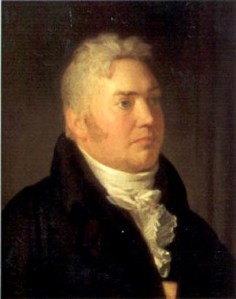
Samuel Taylor Coleridge
Coleridge supplied unusually direct evidence in a January 1804 notebook entry. He described finding a task agreeable, then neglecting it precisely because he felt obliged to perform it. He wondered whether the attraction of liberty and spontaneity explained the pattern. His extensive unfinished work makes him fascinating, but it is important not to reduce everything to delay: his ill health, complicated commitments, creative ambitions, and opium dependence also shaped his working life. The celebrated “person from Porlock” account of Kubla Khan should not be dismissed as a proven fabrication.
Evidence: Coleridge’s notebook entry, January 10, 1804 · Poetry Foundation biography

Augustine of Hippo
Long before the modern psychology of self-regulation, Augustine described the painful gap between what he endorsed and what he was ready to do. In Confessions, he recalls praying for chastity and self-control, “but not yet.” His example is powerful because he explicitly describes knowingly postponing a change he considered important. This is delay in moral and spiritual commitment, however—not evidence for a modern clinical label or grounds to diagnose an addiction centuries after his death.
Evidence: Confessions, Book VIII, chapter 7
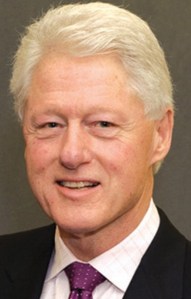
Bill Clinton
A 1994 TIME report described a familiar White House problem: speechwriters and staff prepared material far in advance, yet the president’s major addresses still ended in urgent final revisions. The reporting on his State of the Union speech is especially specific, with deadlines, drafts and rehearsals all documented. This is a case of procrastination amid a demanding political workload, although the public record cannot establish whether every delay reflected avoidance rather than competing priorities.
Evidence: TIME, “The State of Bill Clinton” (1994)
John Perry — NEW
The Stanford philosopher wrote his celebrated essay about “structured procrastination” while avoiding other work he was supposed to do. The central insight is wonderfully mischievous: putting off the highest-priority task may motivate a person to complete several lower-priority ones. Perry turned the observation into a practical philosophy and received an Ig Nobel Prize in 2011. As science, the strategy still requires qualification—getting useful secondary tasks done does not establish that delay on the original task was harmless.
Evidence: Perry’s original essay (1996) · Stanford Daily on his Ig Nobel Prize
Tim Urban — NEW
The writer behind Wait But Why built an enormously popular TED talk around his own deadline-driven behaviour. He describes producing his university thesis in a frantic final sprint after months of minimal progress, and he deliberately undercuts the romantic story that the last-minute paper was a triumph. His “Instant Gratification Monkey” and “Panic Monster” are memorable metaphors, not literal psychological mechanisms. He also draws attention to life goals with no firm deadline, where postponement can become especially difficult to notice.
Evidence: Urban’s TED talk and transcript (2016)
Aaron Sorkin — NEW
The screenwriter of The West Wing and The Newsroom has a well-documented reputation for difficult deadlines. HBO executive Michael Lombardo described occasions when a table read approached and no script draft had arrived, followed by an unexpectedly impressive script. Lombardo also said the delay tormented Sorkin. That distinction matters: the appearance of effortless brilliance at the deadline can conceal substantial distress and coordination costs for everyone waiting on the work.
Evidence: Los Angeles Times reporting and HBO executive interview (2014)
Hunter S. Thompson — NEW
The journalist’s published letters to his editor document an overdue book for which much of the research existed but the manuscript did not. Thompson described how repeatedly reconsidering the form of the work made writing feel impossible. His case illustrates how high standards and uncertainty over structure can become obstacles to execution. It also cautions against one-size-fits-all explanations: creative difficulty, perfectionistic revision and task avoidance may overlap without being identical.
Evidence: Thompson’s correspondence, published in The Paris Review
Famous delays, but more than one possible explanation
These people offer excellent stories about postponement or incomplete work. The evidence is real in important respects, but interpretation requires caution: planning, calculated delay, health, risk and intellectual ambition can all produce the appearance of procrastination.
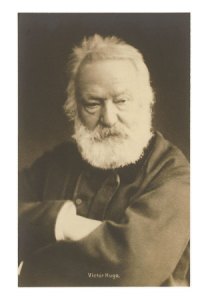
Victor Hugo
The story that Hugo had a servant take away all his clothes is often told as if he wrote naked. His wife’s account is more precise and more interesting: while writing Notre-Dame de Paris, he locked away his outdoor clothes and wore an enormous grey knitted shawl, making it less tempting to leave the house. This resembles a modern commitment device—alter the environment so that an attractive distraction becomes inconvenient. It supports a story about strategic self-management, though it does not by itself establish a lifelong pattern of chronic procrastination.
Evidence: Smithsonian account drawing on Hugo’s wife’s memoir

Frank Lloyd Wright
Wright reportedly drew his initial plans for Fallingwater in a few hours after learning that his client was on the way to inspect the design. Apprentices described the astonishing burst of drafting. But the popular version—months of doing absolutely nothing followed by an entire design produced from nowhere—mistakes drawing for thinking. Wright had visited the site and developed architectural ideas over time. The case poses a difficult question: was this procrastination, private incubation, or both? A fast visible finish does not imply an absence of earlier work.
Evidence: PBS on Fallingwater and Wright’s process · Historical qualification in The New Yorker

Leonardo da Vinci
Leonardo left major works unfinished and repeatedly disappointed patrons, yet he was capable of sustained, extraordinary attention to problems that fascinated him. Contemporary and early biographical accounts document his restless shifts of interest. A 2019 paper proposed an attention-related explanation, and a 2026 historical study distinguishes abandonment from prolonged reworking. Those are explanatory hypotheses, not clinical diagnoses. Some noncompletion may have reflected distraction; some may have resulted from perfectionism, technical experimentation or problems that Leonardo considered unresolved.
Evidence: Historical analysis in Brain (2019) · New historical model (October 2026) · PBS discussion of unfinished works

The 14th Dalai Lama
Tenzin Gyatso has repeatedly said that as a young student he was reluctant to study and preferred play. Later, learning became intrinsically interesting, and he developed an exceptionally disciplined intellectual life. His account shows how motivation can change with interest and understanding. It is a sound example of an initially unwilling student, but youthful reluctance alone does not establish that he is, or ever was, a chronic procrastinator in the technical sense.
Evidence: His official website: first-person account (2020) · His official website: education recollection (2015)

General George B. McClellan
The Union general became a symbol of excessive caution during the American Civil War. Lincoln and other commanders criticized his apparent slowness, especially around Antietam in 1862, and Lincoln eventually removed him from command. But military hesitation cannot automatically be classified as procrastination: uncertainty about enemy strength, the costs of a failed attack and competing orders all matter. Historians continue to debate the extent of McClellan’s missed opportunities. Assertions that his delays alone prolonged the war by a specific number of years go beyond the evidence.
Evidence: National Park Service: McClellan and the lost orders · National Park Service: Lincoln’s dissatisfaction
Franz Kafka — NEW
Kafka’s diaries and letters describe painful stretches of creative paralysis. In a letter written around 1920, while receiving treatment for illness, he reported an extended period without new writing. His case belongs here with an explicit qualification: writer’s block, illness and procrastination are not synonyms. Kafka’s periods of extraordinary productivity also complicate any simple portrait of him as someone who merely refused to work.
Evidence: A documented letter on his inability to write (2024 report) · Cambridge Companion: letters and diaries
Legends, misattributions and literary cases
Some of the most repeated procrastination stories work better as cultural folklore than as history. Rather than quietly deleting familiar names, this section explains what is and is not established.

Herman Melville
An old anecdote says Melville’s wife chained him to his desk to finish Moby-Dick. I could not find dependable documentary evidence for that detail in the biographical sources consulted. Melville’s publishing and financial difficulties are real; the literal chain is not something this page should present as established history. It is kept here as an example of how colourful stories about famous writers can harden into accepted fact.
Evidence: Scholarly biography overview, Johns Hopkins University Press
Johann Rall
A famous retelling says the Hessian commander was playing cards on Christmas night in 1776 and put an urgent warning about Washington’s approach into his pocket unread. The Battle of Trenton and Rall’s death are historical facts, but the story of the ignored note is disputed. More careful reconstructions describe repeated warnings, exhausted troops and serious tactical problems. A dramatic incident should not serve as proof of fatal procrastination when the decisive detail is poorly supported.
Evidence: Journal of the American Revolution: fact versus lore · Washington Crossing Historic Park

Gene Fowler
Fowler is often credited with the line comparing writing to staring at a page until drops of blood appear. Versions of that joke circulated under several names; the specific Fowler attribution appears relatively late and lacks a demonstrated first-hand source. More importantly, a witty remark about how difficult writing feels is not evidence that its supposed author habitually procrastinated. This is better treated as a quotation-attribution caution than as a biographical case.
Evidence: Quote Investigator on the “writing is easy” family of quotations

Marcus Aurelius
The Roman emperor often warned himself against wasting time and putting off worthwhile action. But the presence of such reflections in Meditations does not demonstrate a history of chronic procrastination. He is included as a useful philosophical counterpoint: people can recognize the temptation to delay and develop practices to act deliberately without being identifiable procrastinators.
Evidence: Meditations, Book II, accessible text
Hamlet — fictional example
Shakespeare’s prince is probably literature’s most famous procrastinator. He delays vengeance, investigates the ghost’s account and repeatedly questions his own motives. But his hesitation has multiple possible meanings: uncertainty about the evidence, religious and moral scruples, the consequences of murder, and the dramatic demands of tragedy. His “To be, or not to be” soliloquy is principally about existence and death, not a simple question of whether to kill Claudius. It is a brilliant literary case, not a psychological case study.
Evidence: Shakespeare’s Hamlet, full text (Folger) · Scholarly discussion of the delay problem
What these examples do—and do not—show
Procrastination is an unnecessary or counterproductive delay in intended action, often despite expecting the delay to carry costs. The definition matters because the behaviour can be mistaken for strategic waiting, difficult research, artistic revision, illness, or perfectionism. Conversely, being highly successful does not rule procrastination out: people sometimes deliver excellent work while paying a price in stress, missed opportunities and the burden placed on collaborators.
Across these cases, several recurring patterns emerge: immediate alternatives outcompete distant goals; an external deadline or another person sometimes supplies needed structure; and “useful” secondary tasks can become a way to avoid a more important one. Not every profile demonstrates every mechanism. The examples should prompt questions, not retrospective diagnoses.
For the research perspective, see Piers Steel (2007), The Nature of Procrastination: A Meta-Analytic and Theoretical Review of Quintessential Self-Regulatory Failure, and the related quotations collection.
Editorial note (November 2026): This revision retains all 16 people/characters from the original 2014 page, adds five researched cases, corrects unsupported interpretations, and links to the sources used. Portraits from the original site have been retained where the identification was credible. These historical sketches are not clinical assessments.


60 thoughts on “Famous Procrastinators”